
How I Recognized Narrative Wild Was Already In Me
A milestone moment from a special day in the mountains of Mexico.

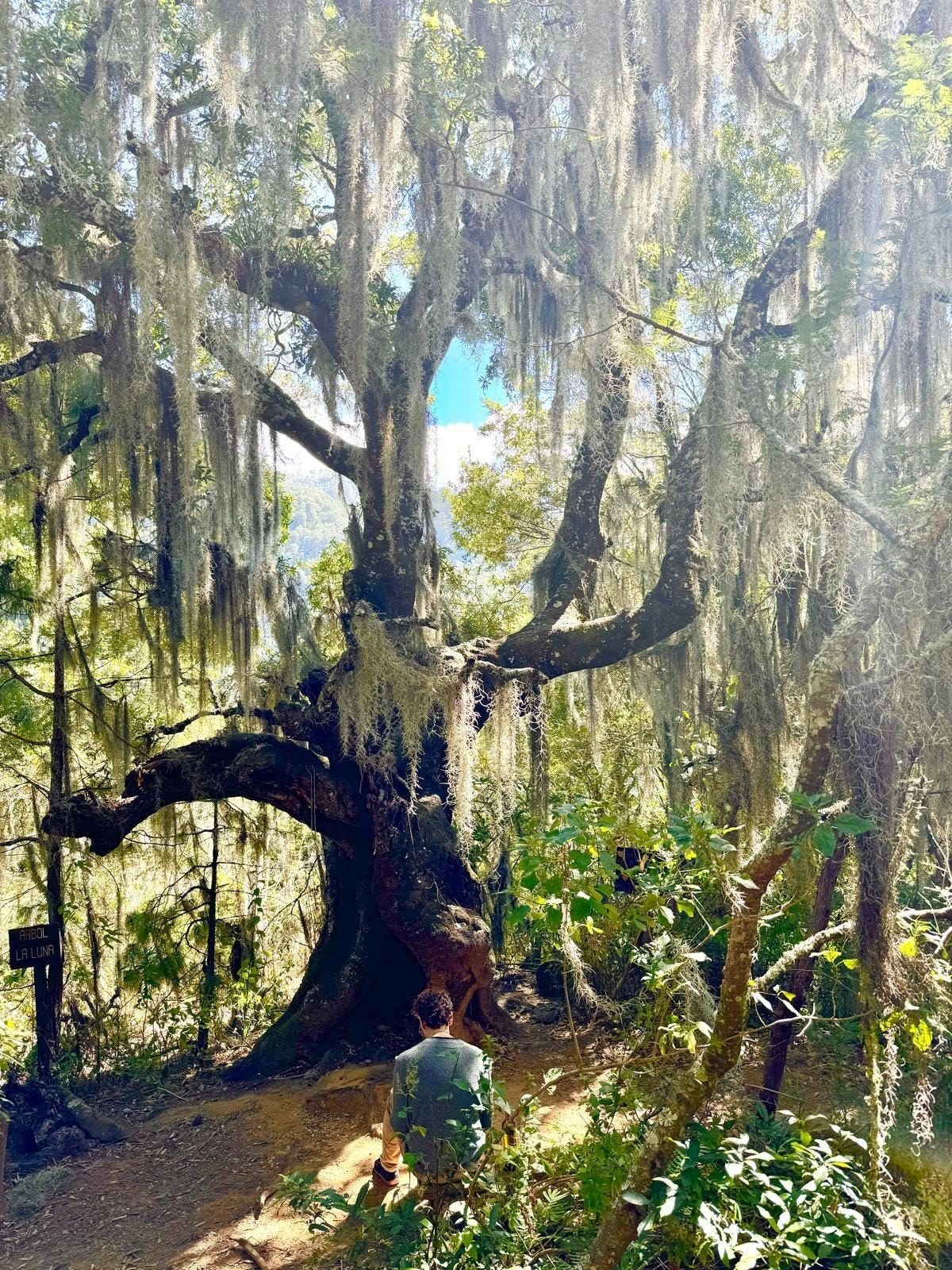
In 2025, I was celebrating my fortieth on a solo journey through Oaxaca, Mexico. I was staying in the mountains and stumbled across this centuries-old moon tree in a cloud forest.
I stood in front of her trying to shake the feelings of insecurity I had been having about my next vocational steps and how to step into my own gifts again. As I noticed her age and gravity, I decided to sit quietly with her.
It was so peaceful.
I sat in awe and started to feel such gratitude for being alive despite being so small, so insignificant in years compared to this tree, and spending so much of that time not knowing what to do with my life.
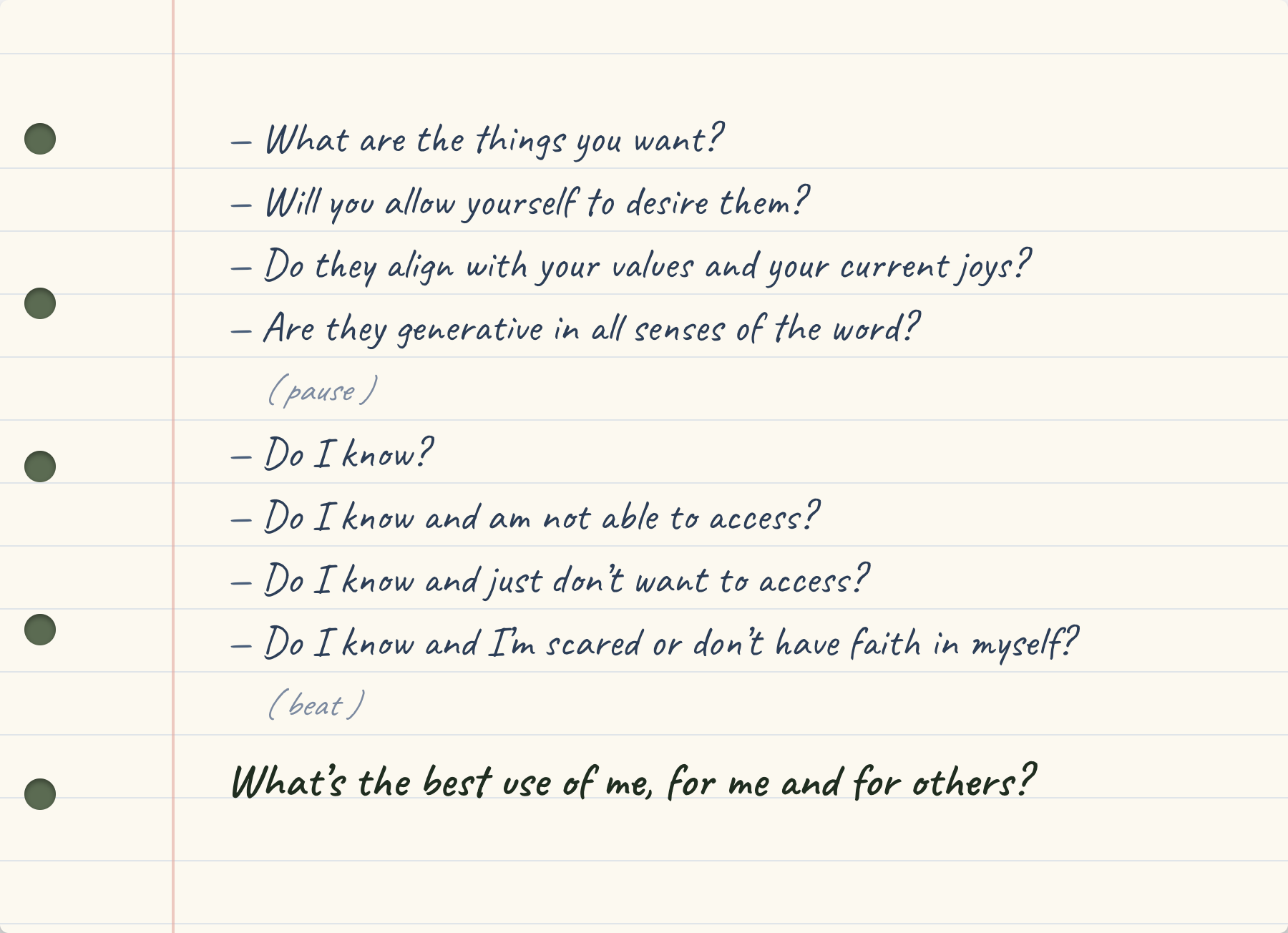
I began writing questions to myself in my notebook:
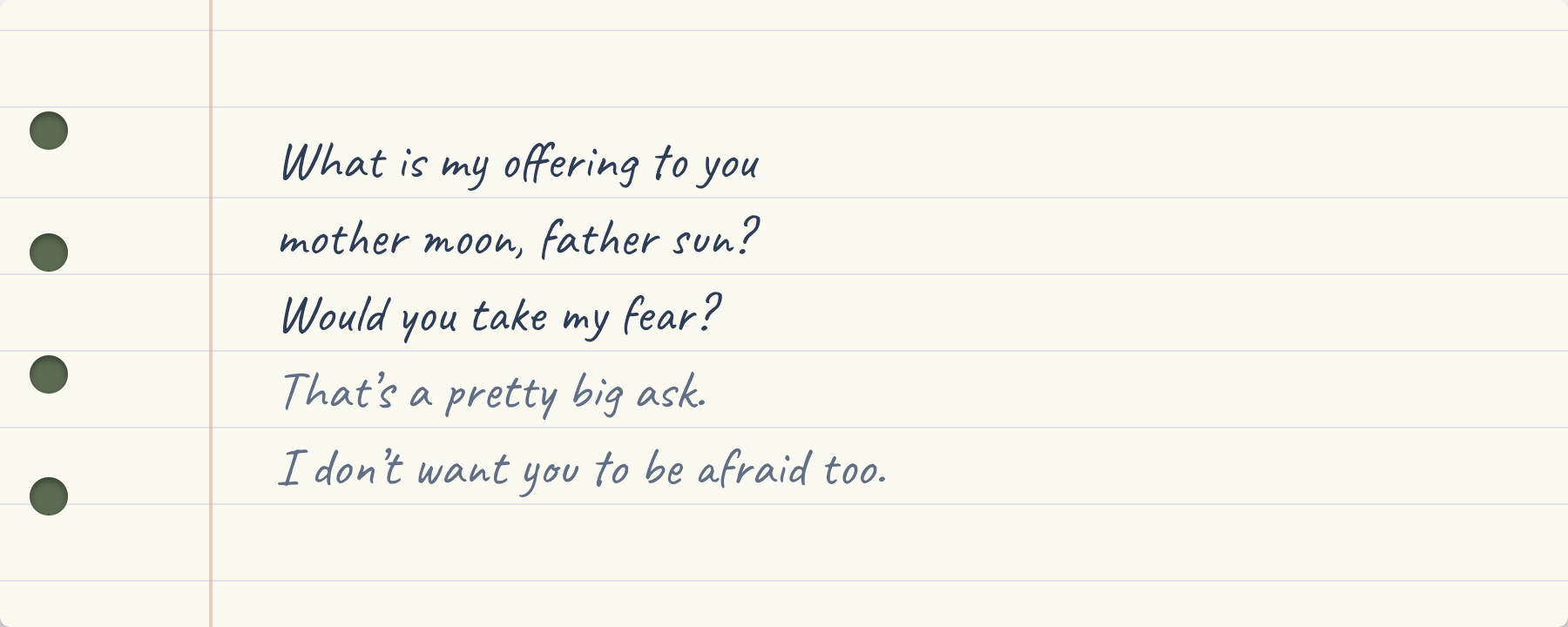
And then I asked for help and it seemed like she was offering, so I said,
Then the wind blew and the sun shone through in patches with the movement of the moss on her branches.
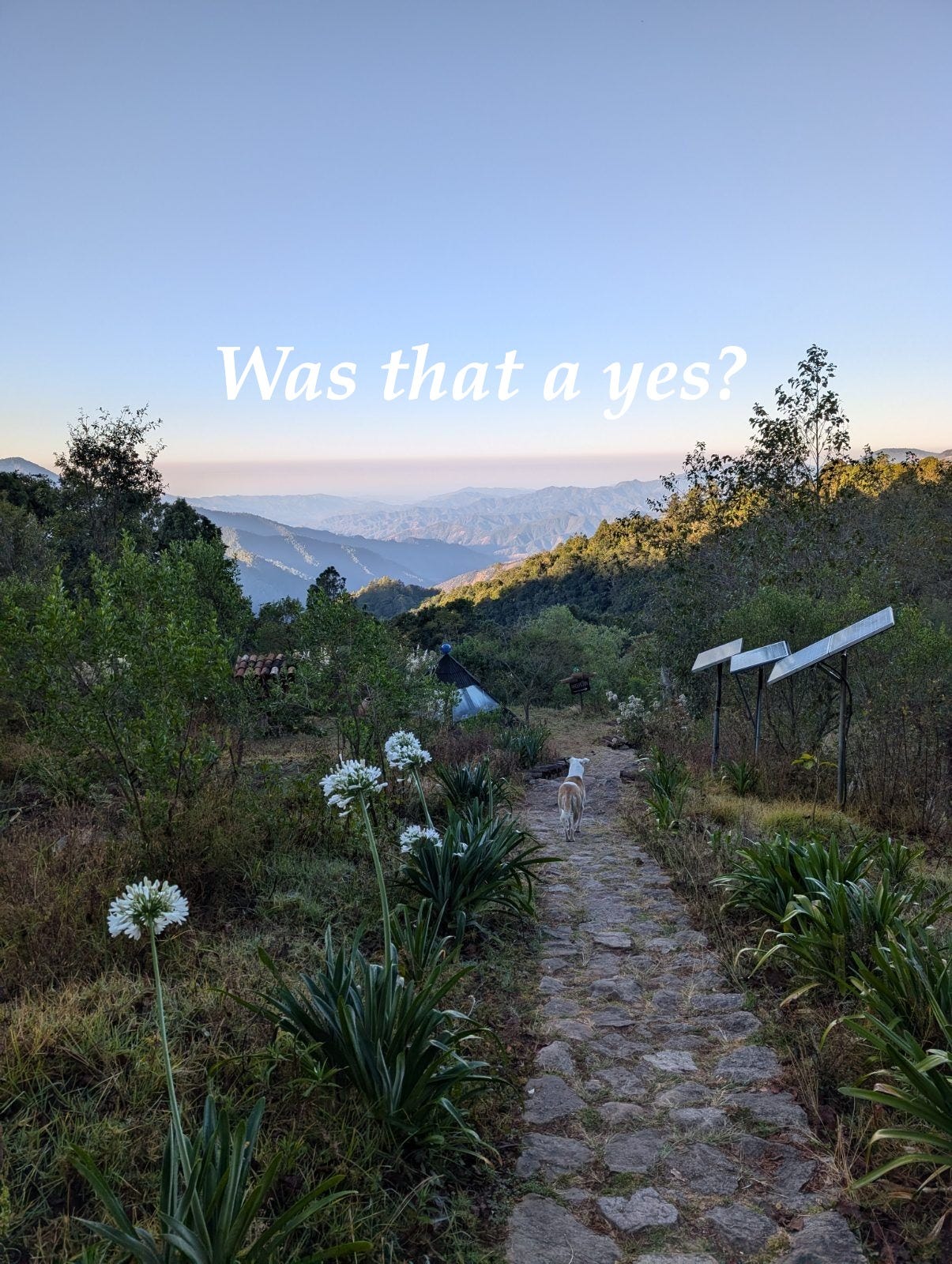
It felt like permission.
So I started writing all my fears out and asking myself what was under each one.
What emerged was a fear of failure. A fear of getting it wrong. Because I was looking at all the time I had “wasted” in all these experiences and career paths that had been hard.
She seemed to be saying:
“Try something and see if it lands.”
So I wrote:
It’s okay to get it wrong…But I was wrong about all those paths. But I picked up so much great stuff along the way.
Then the guidance was there so simply:
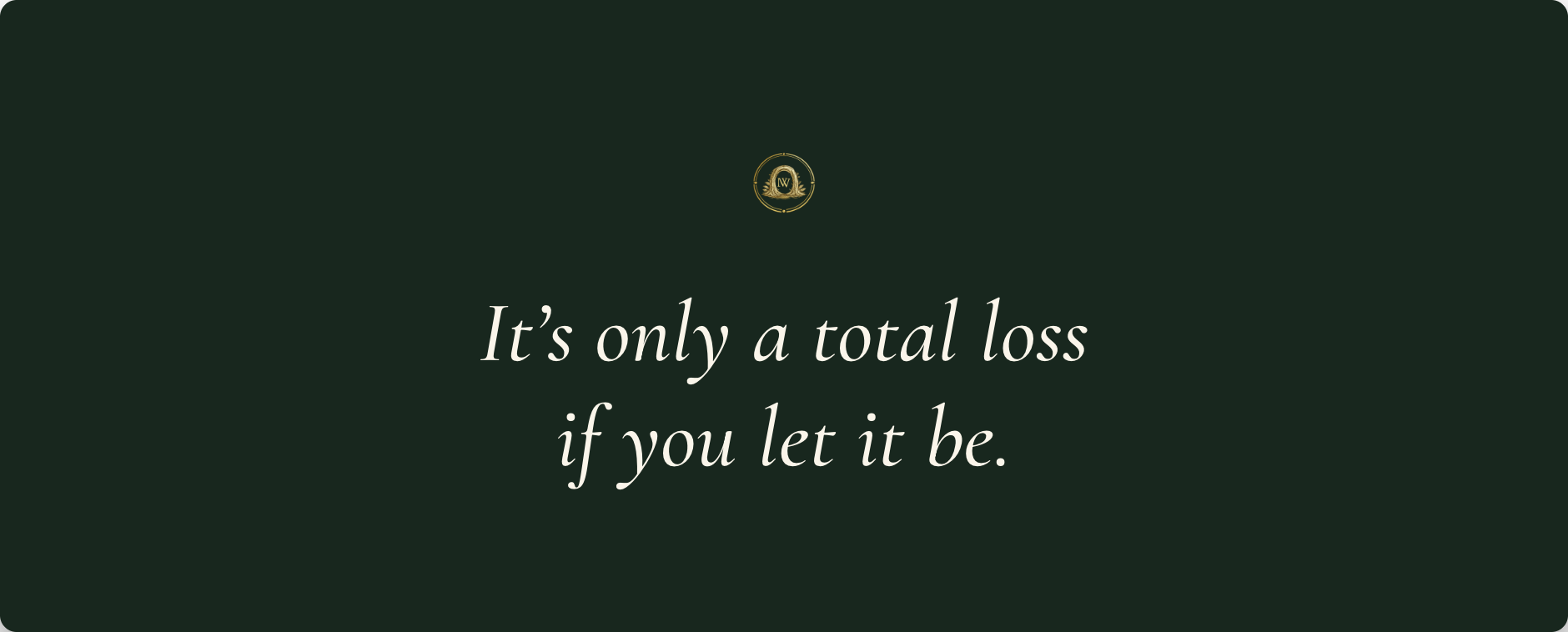
That narrative reframe, that I actually had a choice, opened up the flow for me to see the connection between all the work I had done over the last twenty years.
This wasn’t a new idea, but the realization that the work I had been doing, through theatre, journalism, graduate research, ritual, and my own reconstruction after evangelicalism, had never really been separate pursuits, and it hadn’t been that I got it wrong, but instead it was more complex because all of those things were connected…
They were seeds.
The seeds had been there all along.
The early seeds
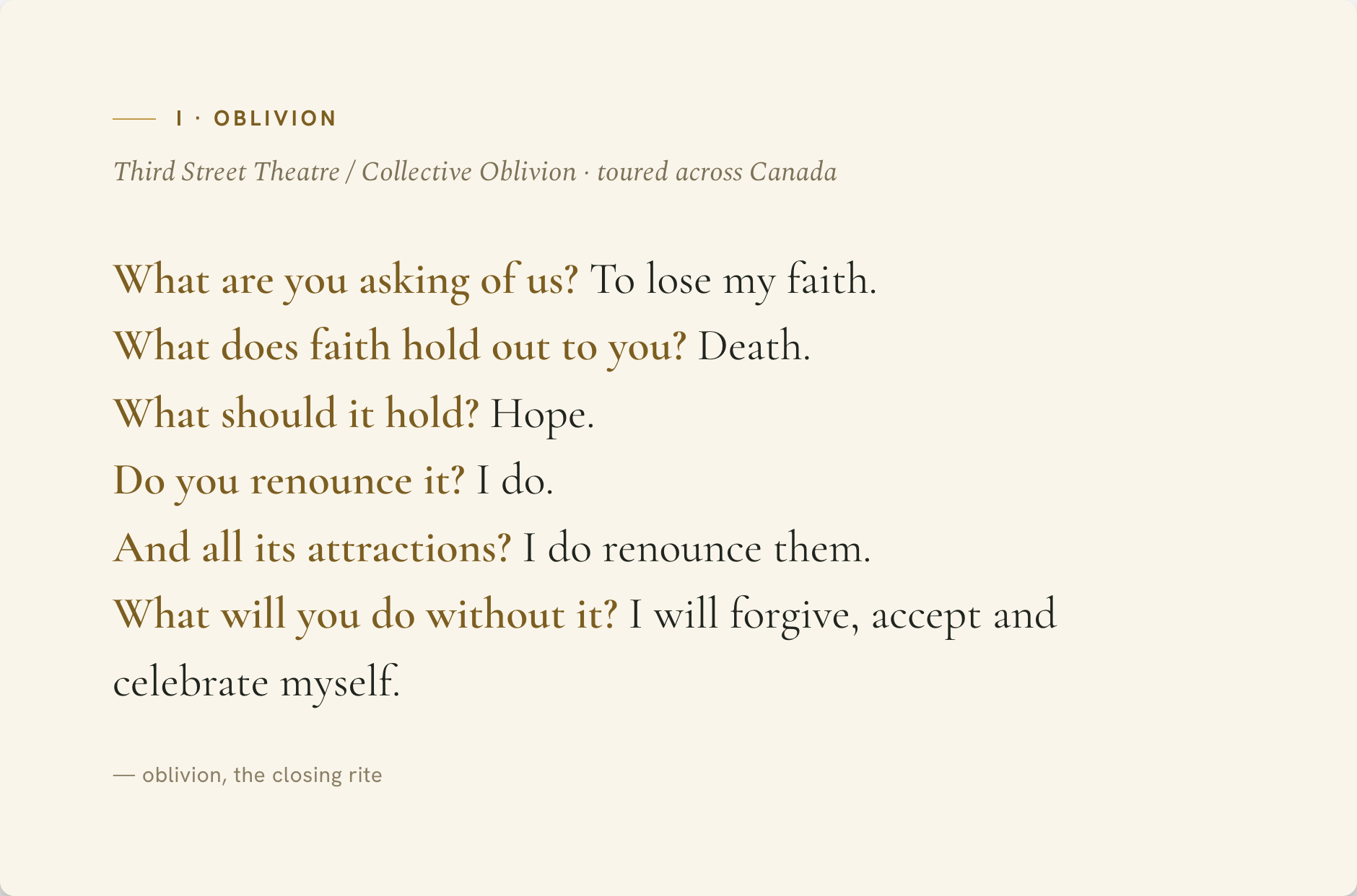
In the writing of my first play oblivion1 (which toured from 2014-2017 with Third Street Theatre2) I had taken the words of an old baptism liturgy and re-imagined them into a liberatory ceremony of unbelief, a ritual for releasing a toxic belief system. Then I performed that inverted liturgy on actual church altars across the country.
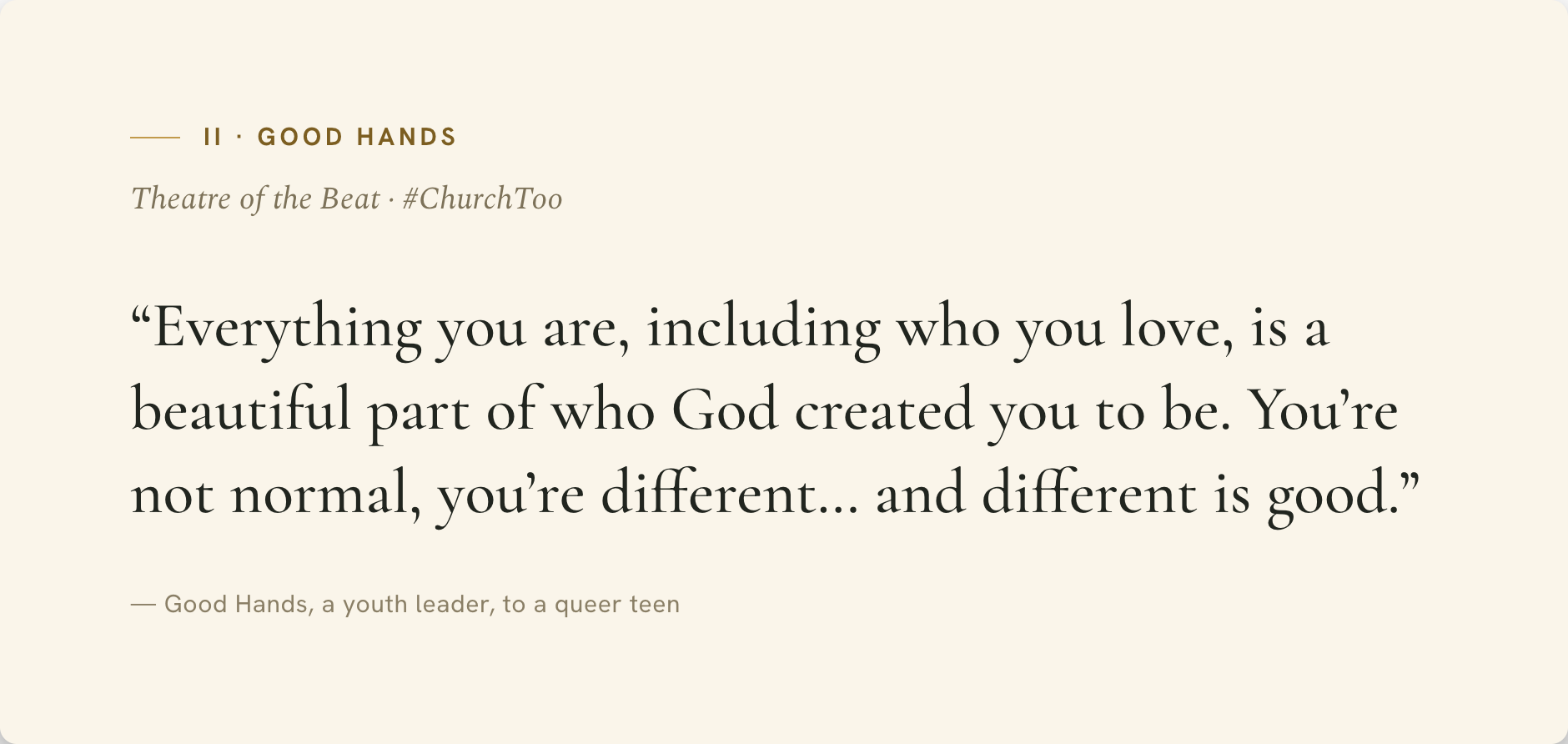
Later came Good Hands3, my contribution to a collection of plays by Theatre of the Beat, commissioned by Mennonite Church Eastern Canada. On it’s national tour, its BC performances were banned last minute, all because I had written in a character of a youth leader who spoke the very words I wished I had heard as a gay teenager.
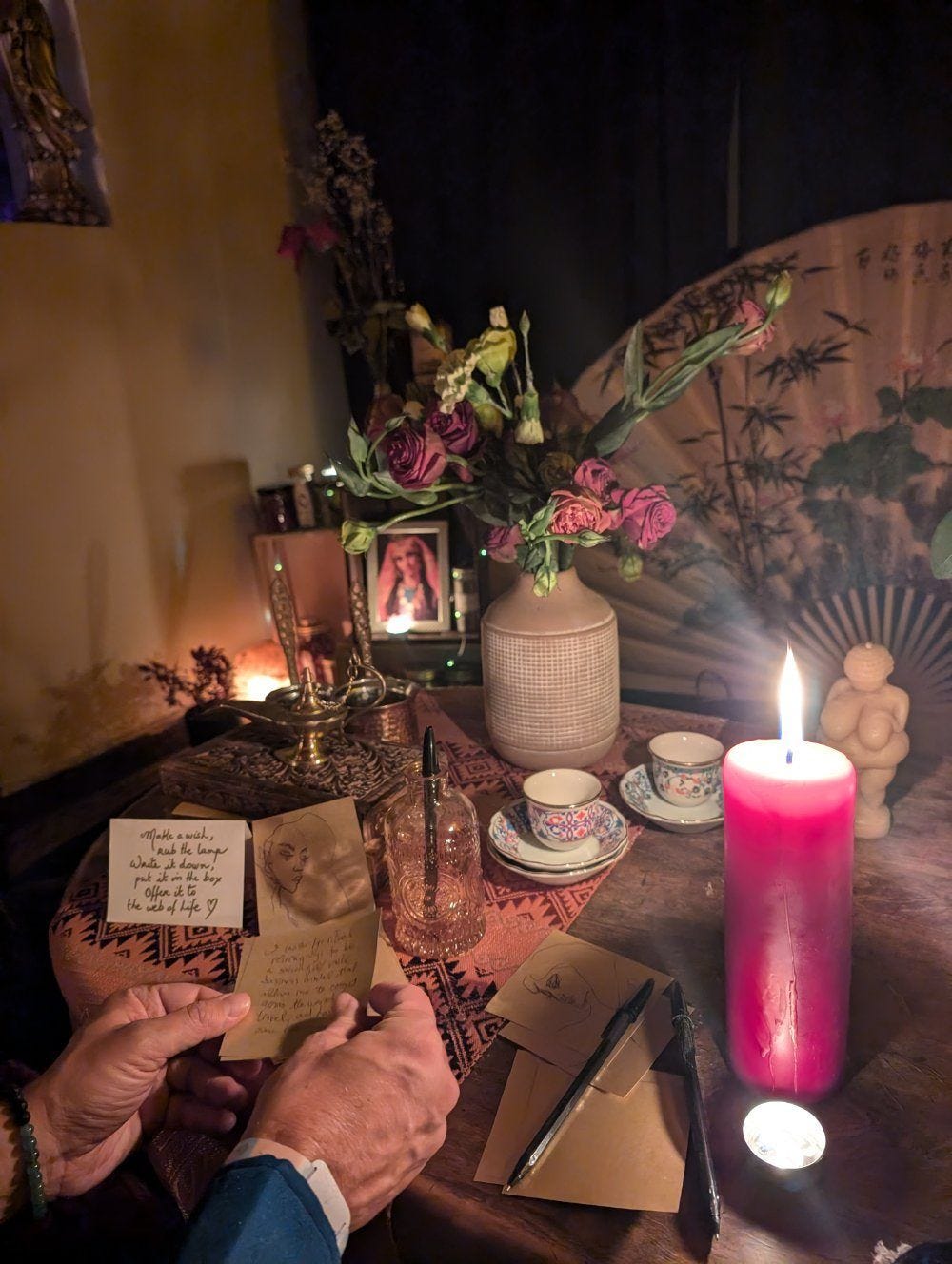
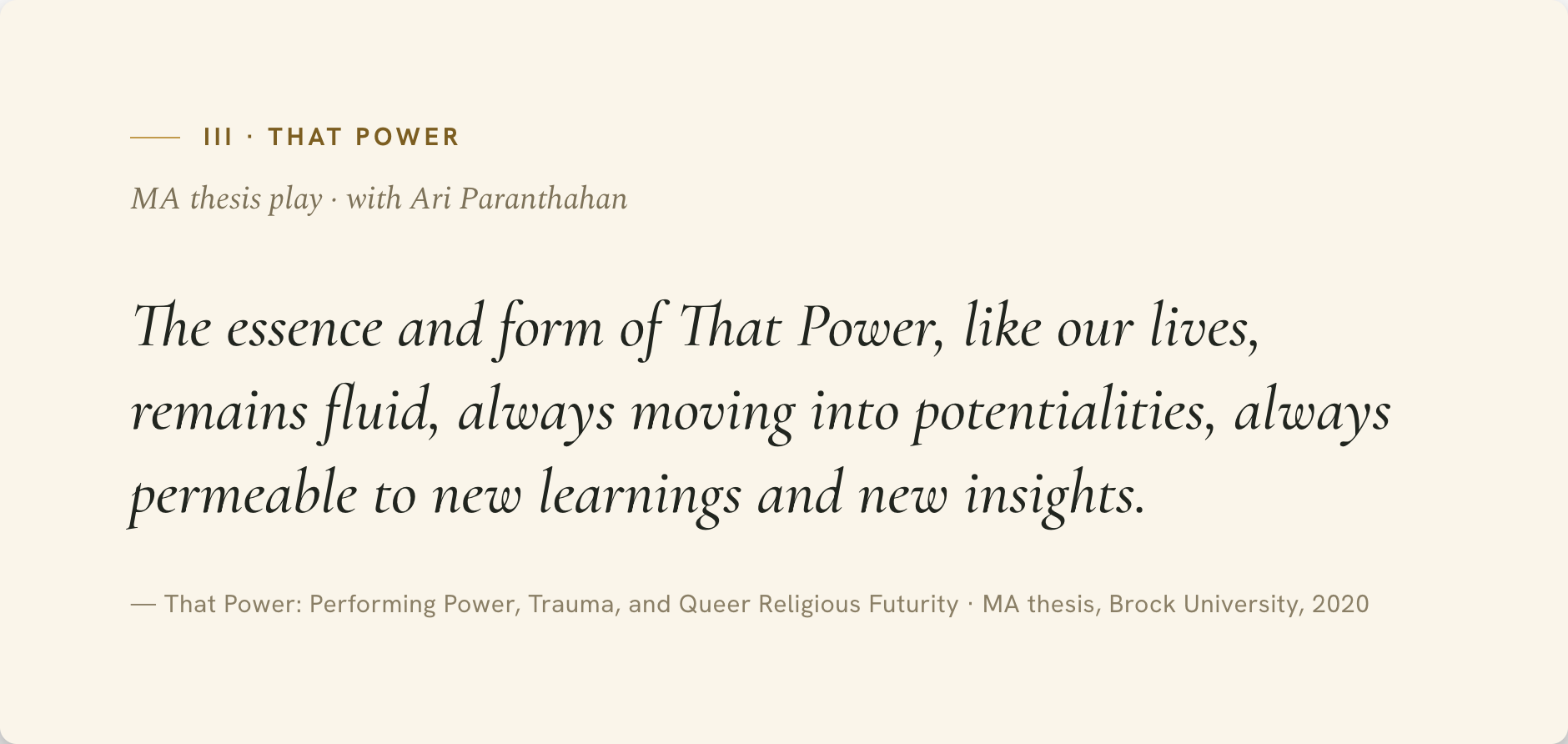
Finally, That Power4, a collaborative storytelling of two queer life stories (mine and Ari Paranthahan’s) written as part of my master’s research. I found myself resisting publishing the play’s script in my thesis5 without writing a caveat that it should remain a “permeable transitional archive”6 because the lives it represented were still unfolding and we may wish to go back and edit.
Recognition
Only afterwards did I recognize that I wasn’t just writing theatre.
I was rewriting myself with words, rewor(l)ding7 the wild possibility that another relationship to myself might exist.
I had been returning to the same ideas for two decades:
that our lives remain open to reinterpretation,
that meaning can deepen over time,
that witnessing changes us,
and that stories continue to evolve because we do.
Looking back now, I think those early works contained what I have come to think of as seeds of reversal8, small moments where inherited narratives begin to loosen, where another way of living first becomes imaginable.
Narrative Wild grew from those seeds.
Or perhaps more accurately, it helped me recognize they had been there all along.
And now that I know what those seeds look like, I get the honour to forage them alongside my community of family, friends, and clients.
Essay cross-published at narrativewild.com
Premiered in 2014 and toured until 2017 - See Calgary Herald article
Read about Third Street Theatre’s vision in XTRA Magazine
Theatre of the Beat toured Good Hands across Canada and Holland in 2018-2019. See Intermission Magazine article
Brock MA Thesis: That Power: Performing Power, Trauma, and Queer Religious Futurity
I use this phrase in a way that reflects my own conceptual framework. It is a record that refuses to be final. Like a life, it remains fluid — always moving into potentialities, always permeable to new learnings and new insights. It asks the future for its consent.
This is a term I’ve developed to describe rewriting the self with words, and, in the same breath, rewriting the world that self is allowed to live in.
This is the language I’ve developed in my work to mean the small moments where an inherited narrative begins to loosen, and another way of living first becomes imaginable. First named in my thesis, which calls That Power itself “a seed of reversal,” germinating in traumatic soil toward unknown queer futures.